
Last Updated on November 1, 2026 by Daniel Osakwe
Yamaha HS5 Studio Monitor Review
Pros
- Easy to setup
- Deep Bass
- Built to last.
- Sleek and compact design
Cons
- Pricey
The Yamaha HS5 studio monitor stands as a pinnacle of audio excellence, combining a legacy of innovation with cutting-edge technology. In this comprehensive review, we delve into the intricacies of the HS5, exploring its evolution within the esteemed Yamaha HS series.
Table of Contents
Yamaha HS5 Studio Monitor Review: Design and Build
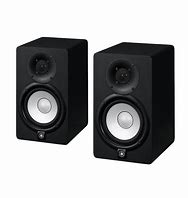
- Aesthetics Meets Durability
- sophisticated design
The HS5 boasts an understated yet sophisticated design, characterized by its sleek contours and robust construction. A meticulous examination of its build quality reveals a marriage of premium materials, ensuring not just aesthetic appeal but also unparalleled durability.
Yamaha HS5 Studio Monitor Review: Audio Performance
- Unraveling Sonic Precision
- Deep Bass
Embarking on a sonic journey, we dissect the HS5’s audio prowess. Through a detailed sound quality analysis, we uncover the nuances of clarity, precision, and the frequency response that define its sonic signature. From the pulsating low-end reproduction to the depth of its bass response, every auditory facet is scrutinized.
Exploring the vast landscape of stereo imaging capabilities, we scrutinize the HS5’s ability to create a captivating soundstage. The examination encompasses the breadth and depth of its imaging prowess, defining its ability to transport listeners into a three-dimensional sonic realm.
Yamaha HS5 Studio Monitor Review: Technical Specifications
- Drivers and Power Unveiled
- Accurate power handling
Delving into the technical realm, we unravel the intricate driver configuration and size. A comprehensive breakdown of the speaker drivers showcases their role in sculpting the HS5’s sonic profile. The article explores the direct impact of driver size on performance, shedding light on its correlation with sonic accuracy and power handling.
Navigating the terrain of amplification and power output, we delve into the wattage, impedance, and power handling capabilities. Further, an exploration of amplifier type unveils its profound influence on sound, elucidating how it shapes the HS5’s sonic identity.
Yamaha HS5 Studio Monitor Review: Functionality and Features
- Control and Connectivity at Your Fingertips
The HS5’s functionality transcends mere audio prowess, extending to an array of control options and connectivity features. An in-depth analysis of its input/output ports unravels their functionalities, while a meticulous examination of user controls and adjustment features showcases their contribution to the user experience.
The article navigates through the intricacies of room control and acoustic tuning, elucidating the settings’ overview and their pivotal role in shaping the audio output based on varying room acoustics.
User Experience and Final Verdict
Centering the discussion on user experience, we evaluate the HS5’s user-friendliness and practicality, dissecting the ease of setup and daily usage. Incorporating user feedback and reviews, we paint a comprehensive picture of the monitor’s real-world performance.
In conclusion, we synthesize the HS5’s strengths and weaknesses, culminating in a final recommendation grounded in a meticulous analysis of various factors, empowering audiophiles to make an informed decision.


