Last Updated on November 1, 2026 by Daniel Osakwe
Unveiling the 5 Best Studio Monitors of 2024
| Products | Features | Where to Buy | Where to Buy |
| M-Audio BX4
|
Frequency response: 80Hz–22kHz | Speaker configuration: 2-way | Driver size: 3.5”, 1” | Tweeter type: Kevlar | Get it on Amazon | Get it on eBay. |
| Yamaha HS5
|
Frequency response: 54 Hz – 30 kHz | Speaker configuration: 2-way | Driver size: 5”, 1” | Tweeter type: Kevlar | Get it on Amazon | Get it on eBay. |
| ADAM Audio A7V
|
Frequency response: 45 Hz – 20 kHz | Speaker configuration: 2-way | Driver size: 5″, 4″ | Tweeter type: Ribbon | Get it on Amazon | Get it on eBay. |
| IK Multimedia iLoud MTM
|
Frequency response: 40 Hz to 24 kHz | Speaker configuration: 2-Way/3-speakers bi-amped | Driver size: 3.5″ x2, 1″ tweeter | Get it on Amazon | Get it on eBay. |
| KRK Rocket RP7 G4
|
Frequency response: 42 Hz – 40 kHz | Speaker configuration: 2-way | Driver size: 7”, 1” | Tweeter type: Kevlar | Get it on Amazon | Get it on eBay. |
Studio monitors are the unsung heroes behind every impeccable sound production. Choosing the right one requires an understanding of their nuances and capabilities. In this comprehensive guide, we’ll unravel the 5 best studio monitors of 2024, catering to various needs and preferences.
Table of Contents
The 5 Best Studio Monitors
M-Audio BX4: Affordable Excellence
Frequency response: 80Hz–22kHz | Speaker configuration: 2-way | Driver size: 3.5”, 1” | Tweeter type: Kevlar | Inputs: 1x RCA stereo input pair, 2x 1/4″ (6.35 mm) TRS inputs, 1x 1/8″ (3.5 mm) stereo auxiliary input | Powered: Yes (85W) | Digital connectivity: No
For those seeking a blend of affordability and quality, the M-Audio BX4 emerges as a top contender. These compact, budget-friendly speakers cater not only to musicians but also to content creators, gamers, and streamers. Despite their smaller size and lower price point, the BX4s deliver a commendable sound quality, making them ideal for home recording studios. Their thoughtful design, featuring volume controls and multiple input options, offers convenience without compromising on sound quality. Perfect for those looking for high-quality speakers without breaking the bank.
See our review: M-Audio BX4
| Pros | Cons |
| Well built. | Lack the scale of big nearfield monitors. |
| Portable |
Yamaha HS5: Clarity in Compactness
Frequency response: 54 Hz – 30 kHz | Speaker configuration: 2-way | Driver size: 5”, 1” | Tweeter type: Kevlar | Inputs: Combo input XLR / 6.3mm balanced jack | Powered: Yes (70W) | Digital connectivity: No
Compact yet powerful, the Yamaha HS5 stands tall in delivering crystal-clear sound with precision. While its 5-inch size might limit its ability to handle subwoofers, it excels in other aspects, making it a go-to choose for various audio applications. Yamaha’s legacy in crafting industry-standard monitors shines through the HS series, ensuring authentic sound production. The HS5’s design, featuring a signature white cone woofer against a black background, has been adopted by iconic studios, signifying its reliability. With an upgraded design and advanced features, it’s an affordable gem for those seeking clarity and precision in sound.
See our review: Yamaha HS5
| Pros | Cons |
| Great design | the controls are located at rear. |
| Amazing value |
ADAM Audio A7V: Premium Performance
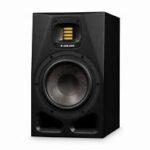
Frequency response: 45 Hz – 20 kHz | Speaker configuration: 2-way | Driver size: 5″, 4″ | Tweeter type: Ribbon | Inputs: RCA, XLR | Powered: Yes (50W) | Digital connectivity: None
For those willing to invest in superior quality, the ADAM Audio A7V takes the spotlight. Representing the epitome of best studio monitors in 2024, the A7V combines German craftsmanship with cutting-edge technology. Its meticulous design, powered by amplifiers dedicated to individual components, ensures a remarkable sound pressure level. The A7V’s innovative features, including room adjustment controls and remote accessibility, redefine flexibility in sound presentation. With its refined professionalism and attention to detail, this monitor caters to the discerning audiophiles and professionals seeking the utmost in performance.
| Pros | Cons |
| Clear precise top end with EQ adjustment if required | Rear mounted power LED seems pointless. |
| Compact |
IK Multimedia iLoud MTM: Balancing Compactness and Quality
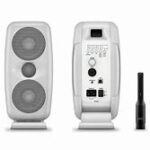
Frequency response: 40 Hz to 24 kHz | Speaker configuration: 2-Way/3-speakers bi-amped | Driver size: 3.5″ x2, 1″ tweeter | Tweeter type: low distortion, back chambered silk dome | Inputs: 1x combo XLR-1/4” TRS balanced input; 1/8” TS ARC microphone input | Powered: Yes (LF power: 70w RMS, HF power: 30w RMS) | Digital connectivity: 1 x USB type-B (service use only), input for omnidirectional, mems based precision measurement microphone
Positioned as an exceptional runner-up in the market, the iLoud MTM from IK Multimedia impresses with its sleek design and room correction feature. Designed for compact studios, these monitors deliver a balanced and pleasing sound profile, making them ideal for mixing purposes. While the bass might lack depth for enthusiasts, the smart design, coupled with room correction technology, ensures a consistent and neutral audio experience. Its sturdy build and thoughtful placement of drivers make it a reliable choice for small studio environments.
| Pros | Cons |
| Built to last | Pricey |
| Smart design |
KRK Rocket RP7 G4: Engineering Marvel
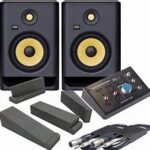
Frequency response: 42 Hz – 40 kHz | Speaker configuration: 2-way | Driver size: 7”, 1” | Tweeter type: Kevlar | Inputs: Combo input XLR / 6.3mm balanced jack | Powered: Yes (145W) | Digital connectivity: No
The crowning jewel of studio monitors for 2024, the KRK Rocket RP7 G4, is a testament to innovative design and superior functionality. This monitor offers a plethora of fine-tuning options, allowing users to customize audio output according to their room acoustics and preferences. With a redesigned cabinet and enhanced stability, it seamlessly integrates into various setups while maintaining optimal volume control. Its performance-to-price ratio makes it a compelling choice for musicians and producers seeking top-tier quality.
| Pros | Cons |
| Graphic EQ | pricey. |
| Great bass |
Choosing The Best Studio Monitors
Studio monitors, the unsung heroes of a music producer’s toolkit, play an indispensable role in shaping the final sound of any recording. Choosing the best studio monitors is a meticulous process that involves considering various technical specifications, understanding the nuances of room acoustics, and conducting rigorous listening tests.
Factors to Consider When Choosing the Best Studio Monitors
Factors like frequency response, driver configuration, and amplification significantly impact a studio monitor’s performance and suitability for different environments and music genres.
Technical Specifications
- Frequency Response: The frequency response range indicates the span of frequencies a monitor can reproduce. A wider range doesn’t always equate to better performance; rather, a flat response across the range is critical for accurate sound representation.
- Driver Configuration: Different driver types—woofers, tweeters, and mid-range drivers—work together to cover various frequency ranges. Understanding the configuration helps in evaluating a monitor’s ability to reproduce sound with clarity and precision.
- Amplification: The amplifier within a studio monitor influences its power output and overall performance. Class A/B, Class D, and bi-amplification setups are common, each impacting factors like efficiency and distortion differently.
Room Acoustics and Monitor Placement
- Acoustic Treatment: Room acoustics greatly affect how sound behaves. Acoustic treatments such as bass traps, diffusers, and absorbers help in minimizing unwanted reflections and resonances, ensuring a more accurate monitoring environment.
- Proper Placement: Where you position studio monitors within a room can significantly alter their performance. Placing them at ear level, away from walls and corners, reduces unwanted effects caused by room interactions.
Listening and Testing Process
- Critical Listening: Engaging in critical listening sessions allows for discerning nuances in sound quality. Listening for details like stereo imaging, transient response, and frequency balance aids in evaluating a monitor’s accuracy.
- Test Tracks and Genres: Utilizing diverse tracks across genres helps in assessing how well studio monitors handle different styles of music. From intricate classical compositions to heavy-hitting bass in electronic music, each genre tests various aspects of a monitor’s capabilities.
Budget Considerations
- Value vs. Cost: While budget is a crucial factor, it’s essential to weigh the value a studio monitor provides against its cost. Investing in quality monitors that align with specific needs can be a more sustainable choice in the long run.
- Long-Term Investment: Studio monitors are a foundational component in a studio setup. Considering them as a long-term investment rather than a mere expense can lead to better decisions in choosing quality equipment that grows with evolving needs.
Conclusion
Choosing the best studio monitors is pivotal for achieving unparalleled sound quality. Whether it’s the affordability of the M-Audio BX4, precision of the Yamaha HS5, premium performance of the ADAM Audio A7V, balance of the IK Multimedia iLoud MTM, or the engineering marvel of the KRK Rocket RP7 G4, each monitor caters to distinct needs. Dive into the world of studio monitors and elevate your audio experience with the best options of 2024. Like, comment, and share for more insights into the world of audio technology.