Last Updated on November 1, 2026 by Daniel Osakwe
Welcome to our review of the best 3D printers. 3D printing, also called added substance fabricating, is the development of a three-dimensional object from a CAD model or an advanced 3D model. 3D printing uses PC helped structure (CAD) to make three-dimensional items through a layering technique. 3D printing involves layering materials, similar to plastics, composites, or bio-materials to make objects that run fit as a fiddle, size, inflexibility, and color.
Below, we’ve highlighted and reviewed the 9 best 3D printers available in the market. These printers are durable, easy to use, efficient, fast, and quite affordable.
So, if you’re looking for the best 3D printers to buy, you just found the right place.
Table of Contents
Buyers Guide: Things to Consider Before Buying 3D Printers
Types: There are two essential kinds of 3D printers: FFF (fused fiber fabrication) and SLA (stereolithography). FFF printers — which also spread FFM (fused fiber manufacturing) and FDM (fused deposition modeling) devices — work by relaxing a plastic fiber in a moving printhead to outline the model.
SLA printers use a brilliant (UV) laser to set a pitch, focusing the laser to outline the solid model. FFF printers are generally more affordable, less troublesome, and easier to use, regardless of the way that SLA models like the XYZprinting Nobel 1.0 (around $1,000) and the $1,295 Peopoly Moai are cutting down the cost contrast.
Printing materials: Whichever kind of printer you pick, center around the sort of material it uses when printing. The fiber material used by FFF printers like the LulzBot Taz 6 is open in a couple of exceptional materials, for instance, PLA (a delicate, biodegradable material), ABS (a comparative plastic used in Lego squares), nylon, TPE (a fragile, versatile like material) and HDPE (a light, tough polystyrene). Countless these materials, particularly PLA and ABS, are available in a tremendous extent of colors. Fibers come in two sizes: 1.75 mm and 3 mm, which are not good.
Print volume: All printers have limitations on the size of the 3D print they can convey. That limit is portrayed by the size of the print bed and how far the printer can move the printhead. This is by and large assessed in cubic inches, in any case, you should moreover concentrate on all of the individual estimations, which choose the most extraordinary size 3D print the device can make.
Print speed and quality: 3D printing is a moderate business, and at present, it is profoundly far-fetched to get around this. You should see that a 3-to 4-inch model to routinely take someplace in the scope of 6 and 12 hours to print, depending on the print quality you select. That is a consequence of the way 3D printing works: The print is created in layers. The thicker these layers are, the quicker the print is conveyed at this point the lower the print quality is, the layers become progressively observable.
Along these lines, there is a trade of print speed and print quality. The best 3D printers will allow you to make sense of what heading you have to go with this, conveying prints quickly or even more continuously anyway at a higher rate. The best printers offer a wide extent of significant worth settings, from fast (anyway low quality) to slow (yet high caliber).
Best 3D Printers Compilation Chart
| Product | Features | Where to Buy |
| CEL-UK RoboxPro
|
|
Get it on Amazon |
| Monoprice Voxel
|
|
Get it on Amazon |
| Formlabs Form 3
|
|
Get it on Amazon |
| LulzBot Mini 2
|
|
Get it on Amazon |
| Polaroid PlaySmart
|
|
Get it on Amazon |
| XYZ da Vinci Nano
|
|
Get it on Amazon |
| Ultimaker 3
|
|
Get it on Amazon |
| Peopoly Phenom
|
|
Get it on Amazon |
| Toybox 3D Printer
|
|
Get it on Amazon |
| Original PRUSA SL1
|
|
Get it on Amazon |
Best 3D Printers in Quality
CEL-UK RoboxPro
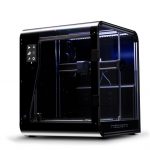
Print technology: Fused Deposition Modeling | Filament Diameter: 1.75mm | Build Area: 210 x 300 x 400mm | Minimum layer resolution: 50 microns | Maximum layer resolution: 500 microns | Dimensions: 513x508x605mm | Weight: 26kg
CEL-UK is a pioneer in 3D Printer development, with the first Robox printers acquainting numerous new highlights with the universe of FDM 3D printers. The RoboxPro is Robox for a huge scope with a list of capabilities that reads like a 3D print list of things to get; auto fiber stacking, auto bed leveling, Wi-Fi, arrange printing, and swappable instrument heads.
The primary focal point of the machine is quality and unwavering quality, intended for anybody needing a printer that can understand item thoughts and get them to showcase. The encased structure settles on it a perfect decision for business and instructive use.
| Pros | Cons |
| Network ready | Expensive |
| Swappable print heads |

Ultimaker 3
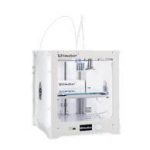
Printer Type: FDM | Layer Resolution: 20 to 200 microns | Materials: Nylon, PLA, ABS, CPE and PVA | Build Volume: 8.5 x 8.5 x 7.9 inches | Printer Size / Weight: 23 x 19 x 13.5 inches / 23.4 pounds
You’ll follow through on a lofty cost this Ultimaker printer, however, in case you’re a structure proficient or genuine 3D-printing aficionado, the Ultimaker 3 is more than worth the expense. Print quality is astounding — the absolute best we’ve seen from a 3D printer, even in draft mode — and the Ultimaker 3 backings a wide scope of materials.
Try not to expect bursting quick print times, yet you will get a liberal form territory of 570 cubic inches. (Select the taller Ultimaker 3 Extended in the event that you need a considerably greater print zone.) Excellent programming makes it simple to oversee prints with the Ultimaker 3, and an overhauled printhead with two swappable extruders adds to the Ultimaker 3’s amazing adaptability.
That component lets you make prints utilizing diverse shaded fibers or even altogether various materials, making this extraordinary compared to other 3D printers accessible for creators who need to make something particular.
| Pros | Cons |
| Support for a range of materials | Expensive |
| Excellent print quality | Speed could be better |

Formlabs Form 3
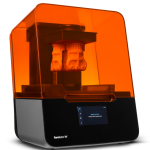
Printer Type: SLA | Layer Resolution: 300 to 25 microns | Materials: Resin | Build Volume: 7.3 x 5.7 x 5.7 inches | Printer Size / Weight: 15.9 × 14.8 × 20.9 inches / 38.5 pounds
How would you follow up the best resin printer around? Manufacture something far and away superior, which is the thing that Formlabs has finished with its new Form 3 3D printer. You’ll get a marginally bigger print territory than you did with the Form 2, however, the genuine change in this new form is the Form 3’s upgraded optics motor. The laser and optics are situated in a fixed bundle that makes the printer increasingly solid since it keeps out residue that may hinder the way of the laser.
We absolutely observed that unwavering quality when testing the Form 3, as none of our prints fizzled — a first for us. We likewise welcome the utilization of Low Force Stereolithography, which implies that the Form 3 uses less power when working with the solidified layers of a print in progress.
At a beginning cost of $3,499, the Form 3 isn’t a reasonable 3D printer, however, on the off chance that you needn’t bother with the new highlights, Formlabs sells revamped variants of the Form 2 for around $600 less. Yet, craftsmen, fashioners, and experts who do a ton of 3D printing will value the time spared by the reliable Form 3.
| Pros | Cons |
| Excellent print quality | Expensive |
| Supports multiple users and printers |
Polaroid PlaySmart
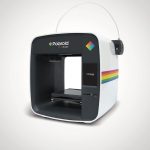
Printer Type: FFF | Layer Resolution: 50 – 300 microns | Materials: PLA, P-Wood, PETG | Build Volume: 4.7 x 4.7 x 4.7 inches | Printer Size/Weight: 12.6 x 11.8 10.6 inches/11 pounds
The brand that made its name with cameras that can in a split second produce photographs is presently doing likewise with 3D printing. The Polaroid PlaySmart is outstanding amongst other 3D printers to get in case you’re searching for an amateur neighborly gadget that likewise creates gorgeous prints moderately quick. In our testing, this Polaroid 3D printer produced prints a lot quicker than similarly evaluated gadgets.
The yield looks great, as well — subtleties are spotless and smooth, and we had not very many issues with our test prints. We additionally like that the Polaroid PlaySmart can work with various kinds of materials, and you’re not secured in purchasing your printing material from the producer.
You can discover more affordable choices in case you’re hoping to begin in 3D printing, and the print zone on the PlaySmart is truly little comparative with further developed models. Be that as it may, this printer takes a great deal of the holding up out of 3D printing procedure, and we think you’ll be satisfied with the outcomes.
| Pros | Cons |
| High-quality print | Software is not very flexible |
| Good speed |
Original PRUSA SL1
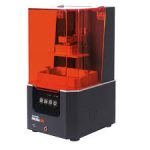
Print technology: Stereolithography | Resin type: 405nm | Build area: 120 x 68 x 150mm | Minimum layer resolution: 25 microns | Maximum layer resolution: 100 microns | Dimensions: 400 × 237 × 225 mm
Prusa Research reformed the FDM 3D printer advertise and the SL1 looks set to do likewise for SLA printers. While the printer utilizes Stereolithography innovation, it’s in actuality a slight variation, know as MSLA.
This uses an LCD and UV LED to uncover the resin and is far less expensive than the high accuracy lasers found in any semblance of Form 3.
While the segment parts might be less expensive the outcomes are remarkable and with help from the incredible PrusaSlicer programming and enormous open-source network, the SL1 looks set to be a distinct advantage in the SLA showcase.
| Pros | Cons |
| High-quality printing | high cost of maintenance |
| Flexible software |
Best 3D Printers in Speed
Monoprice Voxel
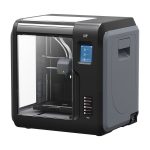
Printer Type: FFF | Layer Resolution: 50 to 400 microns | Materials: ABS, PLA, Wood Fill, Copper Fill, Steel Fill, Bronze Fill | Build Volume: 6.9 x 6.9 6.9 inches | Printer Size / Weight: 15.9 x 15.7 x 15 inches / 19.8 pounds
In case you’re hoping to begin in 3D printing, the Monoprice Voxel 3D printer is an incredible decision, as it conveys top-notch prints without costing you a fortune. Learners will especially value the warmed print base on the Voxel, which implies increasingly solid prints when you use materials like ABS.
The head of the print bed slides out, as well, and it’s bendable, so expelling prints is a simple task. We additionally like the way that the Voxel is encased, a significant thought in case you’re anticipating utilizing a 3D printer in a home or homeroom. The MP Voxel is quick, delivering prints in times we for the most part observe from increasingly costly gadgets.
We were additionally dazzled with the nature of prints, which precisely reproduced subtleties and caught common, smooth bends in our testing. You may run into some minor dissatisfactions with the arrangement, however, once it’s ready for action, the MP Voxel is the best 3D printer for individuals who need to encounter 3D printing just because.
| Pros | Cons |
| Excellent print quality | Wi-Fi connection issues |
| Fast print speed |
LulzBot Mini 2
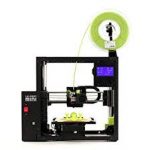
Printer Type: FFF | Layer Resolution: 50 to 400 microns | Materials: PLA, TPU, ABS and others | Build Volume: 7 x 6.3 x 6.3 inches | Printer Size / Weight: 4 x 18 x 13 inches / 19. 9 pounds
This refreshed variant of the LulzBot Mini doesn’t miss a stage with regards to repeating what made the first such an incredible 3D printer. Indeed, you get a printer that is adaptable enough to deal with various materials at a reasonable sticker price in case you’re prepared to step up from models focused on novices.
Be that as it may, the LulzBot Mini 2 exceeds its antecedent by giving you a bigger print zone to work with and another, increasingly adaptable printhead equipped for taking care of many more materials. Our testing uncovered that the Mini 2 produces prints quicker than the first with quality staying high on the completed item.
LulzBot creator Aleph Objects experienced a harsh end to 2019, laying off the vast majority of its staff in October. Fargo Additive Manufacturing Equipment 3D has since purchased Aleph, which implies the LulzBot Mini 2, LulzBot Taz Pro, and other 3D printers stay accessible.
That is uplifting news in the event that you need to get your hands on a standout amongst other 3D printers we’ve tried as of late, however, you may need to look around to discover retailers that have the LulzBot Mini 2 in stock.
| Pros | Cons |
| Prints are fast and of high quality | Expensive |
| Supports a wide range of materials |
Toybox 3D Printer
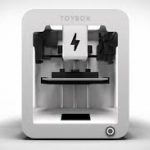
Printer Type: FDM | Layer Resolution: 200 microns | Materials: PLA non-toxic plastic | Build Volume: 3.5 x 3.1 x 2.8 inches | Printer Size / Weight: 9.1 x 7.4 x 7.4 inches / 6.6 pounds
There are more advanced 3D printers out there than the Toybox 3D Printer. However, as a prologue to 3D printing, this gadget will speak to youthful creators hoping to utilize their inventive muscles. Also, they’ll get the chance to deliver toys as a major aspect of the deal! Utilizing the Toybox 3D Printer, you can make little toys — you’re restricted to prints that are around 3 inches on each side. The controls are easy to work, and printer producer Make.
Toys incorporate a choice of free toy layouts that you can use to begin. You’re additionally ready to edit plans or even transfer your own, adding to the imagination that this printer can start. Children shouldn’t utilize the printer solo, as it’s too simple to even think about touching the hot printhead or one of the other moving parts.
Since the Toybox’s printing bed isn’t head, at times prints can be hard to evacuate. By and by, we were enchanted by this printer and how rapidly it delivered great quality prints.
| Pros | Cons |
| Good speed | Exposed hot and moving parts |
| Easy to set up |
Best Budget 3D Printers
XYZ da Vinci Nano
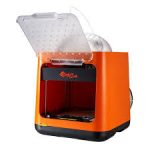
Printer Type: FDM | Layer Resolution: 100 to 300 microns | Materials: PLA | Build Volume: 4.7 x 4.7 x 4.7 inches | Printer Size / Weight: 14.9 x 14 x 11 inches / 10.4 pounds
It might require some push to find, yet the da Vinci Nano from XYZprinting stays a top decision for amateurs and educators who would prefer not to spend oodles of cash beginning in a 3D printer. The da Vinci Nano is a particularly decent deal on the off chance that you can discover it for $200 or something like that — a few retailers offer it for less in case you’re willing to look for an arrangement.
The printer is moderately reduced, about the size of a breadmaker, however it has a liberal for-its size form region of 4.7 creeps on all sides. There’s a way to deter the print zone and shut out a portion of the clamor from printing, yet know that opening the entryway doesn’t stop the printing procedure.
The da Vinci Nano is no speed devil — other best 3D printers produce objects in significantly less time — yet the prints it created in our testing were of generally excellent quality. The product that goes with this 3D printer is additionally simple to utilize, another motivation behind why we suggest the da Vinci Nano for homeroom settings.
| Pros | Cons |
| Affordable | Printing speed could be better |
| Easy to use |
Peopoly Phenom
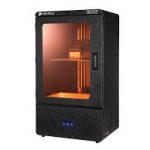
Printer Type: SLA | Layer Resolution: 72 microns | Materials: Resin | Build Volume: 15.7 x 10.9 x 6.1 inches | Printer Size / Weight: 30.7 x 17.8 x 14.3 inches / 92.6 pounds
SLA printers can be expensive, however, Peopoly is doing its part to wreck that cost. With the Peopoly Phenom, you can get an SLA printer that is equipped for working with a wide assortment of pitches for under $2,000. What’s more, you don’t need to forfeit print speed or quality as Phenom produces superb 3D prints. You should be genuinely OK with 3D printing, however as the Peopoly Phenom has a lot of characteristics that require a great deal of tweaking and some persistence.
There’s no Wi-Fi network, for instance, and making a print includes a couple of manual advances. Printing can be really uproarious and there’s a slight synthetic smell, so you’ll need to have a devoted space for this printer in your workshop. (Also, put aside a ton of room — the Peopoly Phenom is a major printer.) Still, in case you’re a 3D printing veteran, you’ll welcome the lower by and large expense of the Peopoly Phenom.
What’s more, the extended form region implies you’ll have the option to make prints that just aren’t conceivable on a portion of the other best 3D printers.
| Pros | Cons |
| Big print area | makes lots of noise |
| Affordable |
Test Process
During our testing, we relied on the opinion of experts and feedback of clients based on these major factors: Quality, Speed, and Price.
More analysis of these 3D printers was uncovered from further research and online reviews. From results and feedback (both positive and negative), we were able to categorize each product according to our standard.
If you take a critical look at our review, you’ll discover the manner in which each 3D printer has been categorized. Also, take note that after our testing, the 3D printers that weren’t up to standard were excluded from our list.
Frequently Asked Questions
Conclusion
Picking the best 3D printers is something that ought to be considered important and without a doubt, we believe that our review must have helped you in picking the right spec of 3D printer to buy. Be that as it may, ensure you check all the necessary details of your preferred choice before purchasing.