Last Updated on November 1, 2026 by Daniel Osakwe
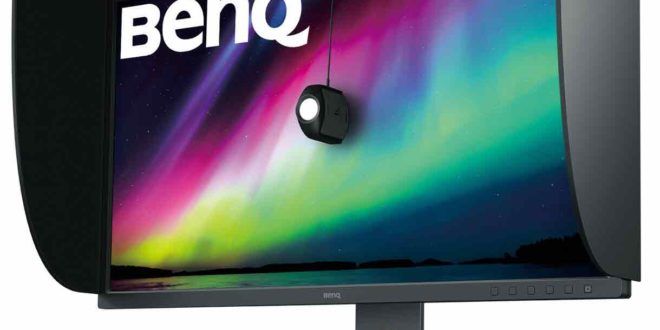
BenQ, part of the world-leading ZOWIE gaming brand, has launched its latest monitor the SW321C. The BenQ SW321C monitor is the follow-up model of the SW series, which improves several features of its predecessor.
Since its launch in September of last year, there has been a lot of buzz around the BenQ SW321C monitor. It is a 21:9 aspect ratio monitor which gives you a much better experience than a normal computer monitor. This is due to the aspect ratio of the monitor being 1.17:1 which is 2.33 times wider than the standard computer monitor.
This gives you an immersive experience when watching movies or videos as there will be no pixels missing from the screen making everything sharper and clearer.
Table of Contents
BenQ SW321C Monitor Quick Review

An expanding number of photographic artists are perceiving the significance of a committed photograph screen for picture editing and print arrangement, yet the cost of favorable to even out shows has put numerous off. BenQ has arisen as the hero of reasonableness in this classification and the PhotoVue series SW321C is its new 32-inch, 4K UHD offering. This is an undeniably mainstream mix of display size and resolution, with the pixel thickness of 137 balancing upgraded detailing with open to review attributes.
With each new age of its photograph screens, BenQ is conveying enhancements in execution, and the SW321C fuses various huge updates. There’s another micro-fine anti-reflection covering called ‘Progressed Reflectionless Technology’ (ART) and an improvement of the ‘Consistency Technology’ to resolve prior issues of color and splendor varieties. Explicitly focused on photographers is ‘Paper Color Sync’ which is a piece of software that empowers the formation of a committed color setting dependent on the printer model, paper type, and the shading space.
The SW321C’s 10-cycle IPS-type board has a wide shading range, repeating 99% of the Adobe RGB color space (thus, clearly, 100% of sRGB/Rec.709) and 95% of DCI-P3, which is the cinematographic color space that is taking over from Rec.709 and has a more extensive color range. Notwithstanding the new ‘Paper Color Sync’ setting, there are 13 others that cover all the primary still and video color spaces alongside ‘M Book’ (to imitate a MacBook Pro screen) B&W, HDR, a custom setting, and arrangements for stacking up to three alignment settings.
The SW321C shows up with custom setting alignment and afterward takes into account equipment adjustment – which is autonomous of the PC’s video card – with a 16-bit LUT to more accurately deal with the resulting color amendment curves. For video-creators, the screen has CalMAN support for LightSpace video adjustment and furthermore supports HDR10 and HLG video contribution for after-creation color reviewing.
In functional terms, the SW321C offers a helpful arrangement of associations (and accompanies no less than four links), incorporating USB-C with 60W power, which likewise implies you possibly need a one-link association with the PC when performing equipment alignment.
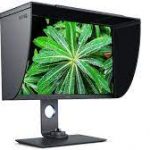
You additionally get a secluded hood and the ‘Hotkey Puck G2’, a wired distant regulator that sidesteps the onboard menu fastens and has adjustable keys. Presumably, the best accommodation this offers is the simple flipping between pre-allotted color spaces.
Also advantageous is the ‘GamutDuo’ display which displays reflected pictures in two diverse color spaces (for example through two unique sources of info). Most eminently, the SW321C’s consistency of both splendor and shading is the best we’ve seen at this point on a BenQ photograph screen and comparable to what we’d anticipate from a significantly more costly model.
The new anti-reflection covering is exceptionally successful without a doubt and guarantees fantastic shading exactness and difference are seen at their best. Truly, this is a very much constructed screen with various comforts that convert into expanded functional efficiencies. Climbing to a 32-inch display with 4K resolution won’t ever be a modest exercise, however, BenQ has quite recently made it significantly more moderate.
BenQ SW321C Monitor Review: Design
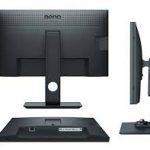
On the actual side, the SW321C is styled like all BenQ’s present SW series screens with a dim dark completion, a super slender bezel, and a simple to-gather stand. For a 32-inch display, the base plate is entirely little so it doesn’t occupy a lot of room on the desktop, however clearly, the board needs some space to move. You need to see space as well, however not as much as would have been the situation without this present screen’s extremely viable anti-reflection covering. Relax, it doesn’t take long to become extremely familiar with a 32-inch display in the event that you’ve been utilizing something more modest.
Furthermore, the 4K UHD resolution is apparently the ‘sweet spot’ as far as the fresh multiplication of fine specifying and the intelligibility of more modest content. In the wake of unpacking, setting up requires just mere minutes and the unit is provided with a seven-piece measured hood, a liberal arrangement of association links (counting USB-C and HDMI), a two-page adjustment report, and the most recent G2 rendition of BenQ’s Hotkey Puck. The burly stand offers a height change scope of 15cm and takes into account both shifting and turning in addition to an entire 90-degree rotation for a representation direction. Generally speaking, soundness is great.
BenQ’s Hotkey Puck is a wired remote regulator – round molded, clearly – which sidesteps the different mode buttons on the screen’s bezel, taking into account the simpler route of the on-screen menus just as – most likely more helpfully faster exchanging between allocated shading modes. It has its own break at the foundation of the stand’s support arm, yet can be situated anyplace and fills in like a mouse besides with a principle rotational sort regulator and a bunch of three client assignable capacity keys.
The principle association straight is situated along the underside of the screen and incorporates double HDMI 2.0 ports, USB Type C and Type B, and Display Port. This course of action makes for tidier link runs – there’s even an opening in the lower part of the remain to keep everything together – however, access isn’t exactly so natural. By and by, however, these are probably going to be associations that won’t be changed all that regularly. Simpler to will is the second arrangement of ports inset on the screen – two USB 3.1 and an SD card reader – which you are substantially more prone to be gotten to consistently.
BenQ SW321C: Features
The features you should look for in a Photographic Monitor
Indeed, before we dive into the subtleties of what the new BenQ SW321C screen offers, how about we investigate what screen highlights are fundamental in the event that you are a photographer and why a nonexclusive screen isn’t appropriate. By and by, I think the base number of highlights we truly need to watch out for is something like 5.
Technology: have an IPS screen. IPS signifies “In-Plane Switching” and at the end of the day, it implies that the immersion and difference don’t change with the point I take a look at the screen. With any non-IPS screen, any revision we make to our picture will be compelled by the specific position we are taking a look at on the screen.
On the off chance that we move even marginally, immersion and differentiation will shift: totally unsuitable not just in the event that we need to print our picture, yet additionally in the event that we essentially need to distribute it on the web. Hence, the majority of the conventional screens we find available are not appropriate for precise after-creation exercises.
Range: Our screen should have the option to imitate however many colors as could reasonably be expected. This limit is characterized by the purported Gamut (indeed, the Gamma ought to likewise be thought of, yet it doesn’t add to the decision of a screen in the event that we are discussing an item delivered in the previous decade).
For a photographic artist, it’s difficult to fundamental that the screen covers 100% of the sRGB color space, yet it should have the option to cover however much as could be expected in the Adobe RGB color space to permit us to figure out how to print also.
Uniformity: When characterized the number of shadings can be recreated by our screen, it is vital that they are replicated consistently all through the whole board and without varieties in splendor in the various regions that make it up.
Contrast: Frequently ignored, it’s anything but a fundamental boundary to have an ideal proliferation of your picture. In an IPS screen, it is a great idea to have it around 1000:1.
Adjustment: it ought to be feasible to play out an equipment alignment through LUT (we should check subtleties on this later) to accomplish DeltaE esteems under 2 and devotion to shading proliferation.
Key Features of BenQ SW321C
In the event that we inconsequentially analyze only the fundamental highlights, we are searching for with the specialized highlights offered by BenQ SW321C we must be fulfilled. We get an IPS monitor with LED backdrop illumination and a high range: we have 100% sRGB color space inclusion and 99% AdobeRGB color space inclusion.
The DeltaE is destined to be under 2 through an individual adjustment endorsement. This implies that once the screen is associated with our PC we can utilize it promptly, and we make certain to have the most noteworthy loyalty in reproduction: a pleasant benefit in the event that we are as yet in question about which calibrator to purchase.
The contrast is 1000:1. Is that all? Unquestionably not as you can imagine. The BenQ SW321C has other truly fascinating specialized highlights, just as one-of-a-kind and elite highlights. In the first place, how about we start with the resolution.
The BenQ SW321C is a 32″ 4K beast. This implies that the most extreme resolution will be 3840 x 2160 pixels, and at 32″ this converts into a thickness of 140PPI.
On the off chance that you are one of the individuals who think the worth of PPIs in a 27″ 4K screen is excessively high, you’ll track down the ideal equilibrium in the BenQ SW321C that will permit you to more readily figure out how to hone, both for on the web and printed distributions. A truly significant element for me is that the screen supports Hardware Calibration.
What’s going on here? Just said, when you go to adjust a conventional reason screen, the remedy bends produced by the test/programming framework follow up on your PC’s video card. One of the principal constraints of this strategy is that the alignment curve oversaw by the video card permit acting just on 256 levels for each tone (8 digits), so barely enough for the right display of a photographic picture.
The equipment alignment rather gives that the revision bends are applied to the LUT (Look Up Table) inside the actual screen, permitting not just a more noteworthy steadiness on the schedule of the adjustment performed, but not to have impediments in the shading delivery of the tones on account of the greater number of levels per shading accessible. The BenQ SW321C has a 16-cycle 3D LUT and can in this way handle 65,536 levels for every shading (rather than 256).
Note that this further enhances the past BenQ SW320 and the 27-inch BenQ SW271 that offered a 14-piece 3D LUT (that was at that point epic). Not awful, correct? To perform equipment adjustment you need to utilize an alignment test (like THIS) with BenQ’s Palette Master Element (PME) programming.
Recall that utilizing the test’s local software or open-source arrangements, for example, DisplayCAL just permits you to do the product adjustment. (For the record, there is elective programming that permits equipment alignment in addition to other things, yet I promise you that they cost more than the actual screen, while PME is free and works incredibly.
Incidentally, you can peruse my PME adjustment guide for BenQ PhotoVue screens HERE!) It is evident that BenQ has perceived that shading precision is the main concern for us picture takers and hence they have created and included AQCOLOR innovation in the BenQ SW321C to guarantee the most extreme shading loyalty, smooth degrees, and normal shading changes.
Also, BenQ SW321C executes the second era of Uniformity Technology: basically, this takes into consideration consistency of various spaces of the screen through software change of many screen sub-regions, finely controlling splendor, and shading constancy in any shading mode.
BenQ SW321C: Performance
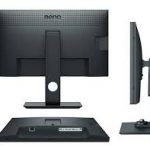
Similarly, as with the other PhotoVue series screens, SW321C’s presentation is an IPS board with LED backdrop illumination. It’s anything but a presentation space of 708.48mm x 398.52mm which, with the 4K UHD resolution of 3840 x 2160 pixels, gives 137ppi. It has 10-digit shading handling that conveys a range of 1.07 billion, bringing about smoother concealing, shading advances, and apparent degrees.
In-Plane Switching empowers a quick reaction season of 5.0ms – a critical spec for video creators specifically – and a wide review point of 178 degrees. As far as reproducible tones, and as referenced prior, the SW321C conveys 99% of the Adobe RGB color space and 95% percent of DCI-P3 which is a cinematographic shading space. It’s taking over from sRGB – or, rather, its video same, Rec.709 – as the norm for shading proliferation on transmissive presentations, including tablets and cell phones.
Each SW321C screen is conveyed to you exclusively aligned and accompanies a printed industrial facility report, however, the equipment adjustment – by means of an outer colorimeter – can be accordingly performed through BenQ’s restrictive Palette Master Element programming (which is provided on a CD-ROM).
The worth of equipment alignment on a photographing screen is that it sidesteps the PC’s video card and shading the board with, in this occurrence, a lot more noteworthy shading exactness of 16-bit preparing (giving 65,536 levels for every shading).
Thus, equipment alignment is, for the most part, viewed as better than programming-based adjustment (which likewise requires a colorimeter), however the last will in any case guarantee that the screen is kept inside determinations after some time.
The screen’s association cove incorporates a USB-C port which, in addition to other things, gives the comfort of a one-link association with the PC when performing equipment alignment (and has 60 watts of force accessible).
To test this present screen’s exhibition we ran programming-based adjustment utilizing the SpyderX Elite colorimeter from Datacolor (which is additionally upheld for equipment alignment in the current variant of the PME programming). DisplayCal’s scores for shading range, tone reaction, white point consistency, contrast, luminance consistency, shading consistency, and shading exactness were astounding.
Most quite, the consistency of both brilliance and shading is the best we’ve seen at this point on a BenQ photograph screen and comparable to what we’d anticipate from a substantially more costly model.
| Pros | Cons |
| Hardware calibration with 16-bit LUT precision | The main connection bay is hard to reach |
| USB-C connectivity | ‘Paper Color Sync’ needs refining to be truly useful |
| Affordable | |
| Improved brightness and color uniformity |


Conclusion
There are still some acceptable contentions for utilizing HD/QHD res screens for photograph editing, yet 4K joined with an extended color space multiplication addresses a major advance up as far as more exact delivering with better resistances and, thus, admittance to more exact altering control.
BenQ expands on this with the SW321C’s fundamentally further developed consistency of both shading and brilliance – and across a major showcase region as well – in addition to the powerful ART hostile to glare covering. It additionally offers phenomenal repeatability and dependability by means of equipment adjustment, the accommodation of USB-C availability, and the potential for much more from the incipient Paper Color Sync work.
BenQ has effectively shown its goal to be a genuine part of the photograph screen business, and the SW321C is the most persuading proof regarding this up until now. From the actual form quality to the presentation execution, it’s anything but favorable to even out the reference screen on each level, with the exception of one… it’s still moderately estimated.


