Last Updated on November 1, 2026 by Daniel Osakwe
List of the Best Laptops for Photo Editing
| Products | Features | Where to Buy |
| Apple MacBook Pro 13
|
Processor: Up to 9th-gen Intel Core i9, 8 cores, 2.4GHz base frequency | RAM: Up to 64GB | Storage: Up to 8TB | Get it on Amazon |
| Dell XPS 15
|
Processor: Up to 10th-gen Intel Core i7, 6 cores, 2.6GHz base frequency | RAM: Up to 32GB | Storage: Up to 1TB | Get it on Amazon |
| Lenovo ThinkPad X1 Carbon
|
Processor: Intel Core i7-8565U (4 cores, 1.8GHz base frequency) | RAM: 16GB | Storage: 512GB SSD | Get it on Amazon |
| Asus ZenBook Duo UX581
|
Processor: Intel Core i9-9980HK (8 cores, 2.4GHz base frequency) | RAM: 16GB | Storage: 512GB SSD | Get it on Amazon |
| Razer Blade 15
|
Processor: Up to Intel Core i7-10875 (8 cores, 2.3GHz base frequency) | RAM: 16GB | Storage: Up to 1TB SSD | Get it on Amazon |
| LG Gram 14″ (14Z90N)
|
Processor: 10th-gen Intel Core i7-1065G7 (4 cores, 1.3GHz base frequency) | RAM: 16GB | Storage: 512GB SSD | Get it on Amazon |
| HP Spectre x360 15 Convertible
|
Processor: Intel Core i7-10750H (6 cores, 2.6GHz base frequency) | RAM: 16GB | Storage: 1TB SSD | Get it on Amazon |
| Dell XPS 17 (2020)
|
CPU: Up to 10th Generation Intel Core i9-10885H | RAM: Up to 64GB DDR4-2933MHz | Storage: Up to 2TB M.2 PCIe NVMe | Get it on Amazon |
| Acer ConceptD 7
|
CPU: 9th-generation Intel Core i7 | Graphics: NVIDIA GeForce RTX 2060 – 2080 | RAM: 16GB – 32GB | Get it on Amazon |
| Microsoft Surface Book 2 (13.5-inch)
|
CPU: Intel Core i5 – i7 | Graphics: Intel HD Graphics 620 – Nvidia GeForce GTX 1050 | RAM: 8GB – 16GB | Get it on Amazon |
| Acer Swift 3 14-inch
|
CPU: 2 or 4 -core Intel Core i5 or Core i7 | Display: 14-inch Retina Display) | Graphics: Intel HD Graphics 620 | Get it on Amazon |
Looking for the best laptops for photo editing can sometimes be confusing. So, to make it easy and straightforward for those searching for one, we’ve highlighted and reviewed the 11 best photo editing laptops in the market today.
These laptops apart from just being great in editing photos, are also good in editing videos and gaming due to their construction and configuration. Although some of these laptops are expensive, however, we’ve been able to add a few laptops for photo editing on a budget in case you’re on a tight spending plan.
So, with nothing more to say, let’s take a further look at the 11 best laptops for photo editing we’ve discovered for you below.
Table of Contents
Buyers Guide: How to Choose the Best Photo Editing Laptops
Screen quality: Laptop screens used to be more blemish than beautiful sight, with shocking differences and viewing points. Fortunately, IPS display tech fixes this and you shouldn’t agree to anything less.
Rapid storage: An SSD (solid-state drive) is an absolute necessity in any new PC. Every one of our alternatives in this purchasing guide incorporates one, however, don’t stall out with a little capacity: 512GB is a base in case you’re working with 4K video.
Graphics: Dedicated graphic cards are extraordinary for gaming, however, they’re not a need here. The present processors can fill in for them, and they pack enough pixel-pushing punch for photo editing.
Processor (CPU): Laptop processor model numbers are basically difficult to unravel. Simply center around the ‘base frequency’ (speed, estimated in GHz), and a number of handling centers (two, four, or six).
Macintosh or PC: The MacBook is supported by numerous picture takers, and all things considered. However, don’t preclude similarly evaluated PCs, which can offer all the more blast per buck, with better upgradability.
Best Laptops for Photo and Video Editing
Apple MacBook Pro
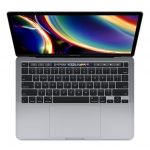
Processor: Up to 9th-gen Intel Core i9, 8 cores, 2.4GHz base frequency | RAM: Up to 64GB | Storage: Up to 8TB SSD | Screen: 16-inch IPS LCD, 3072×1920
Our Apple MacBook Pro 15″ (2019) aced our benchmark tests and felt exceptionally quick in Photoshop. Along with the highest point of the keyboard, you’ll discover Apple’s Touch Bar. This line of virtual fastens progressively changes as indicated by your current application, and Photoshop utilizes it. The Touch Bar naturally shows change buttons and sliders relying upon your chose bed or instrument. The fundamental Retina display has an angle proportion nearer to 3:2 than 16:9, improving its fit to showing photographs from most cameras.
The 3072 x 1920 resolution might be marginally less than 4K, however, it’s effectively fresh enough. It likewise sports Apple’s True Tone innovation that naturally changes the screen’s tone to make up for encompassing lighting. The 16-inch MacBook Pro can be specced up to mind-blowing levels, with RAM up to 64GB and capacity up to 8TB. In any case, do this, and the value rockets into the stratosphere.
We figure the best worth is to go for the 2.3GHz 8-center Core i9 processor with 32GB RAM, a 1TB SSD, and Radeon 5500M designs with 4GB VRAM. Should you need extra storage, it very well may be bought more expense adequately by getting one of the best versatile SSDs.
Read the full review: Apple MacBook Pro
| Pros | Cons |
| Blazing fast and stunning screen | No touchscreen |
| Touch Bar great with Photoshop | Poor connectivity |

Dell XPS 15 (2020)
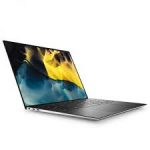
The Dell XPS 15 (2019) range can be confounding: there are loads of various spec arrangements to browse, and evaluating can regularly vary. We figure the best config for picture takers is one that incorporates Dell’s best 4K screen, which flaunts 500-nit brilliance and contact affectability. The main issue with that is not many XPS 15 configs accompany this presentation, and they’re unavoidably at the pricier end of the reach.
The additional money does likewise get you a lot of execution politeness of tenth gen, 6-core Intel Core i7 processor, and you can pick somewhere in the range of 16GB and 32GB of RAM – we’d suggest the last just in the event that you’ll be editing extremely high res pictures or Photoshop PSDs with heaps of layers. The determination of ports is additionally very acceptable, with Thunderbolt 3, USB-C 3.1, in addition to connectors for USB-An and HDMI.
There’s even an implicit full-size SD opening; something that is tragically turning into an extraordinariness in premium PCs.
| Pros | Cons |
| Fast performance | Screen not as well-specced as 2018 XPS |
| Good selection of ports, with SD slot | Relatively small touchpad |
Lenovo ThinkPad X1 Carbon
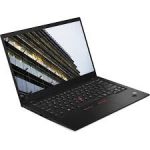
The Lenovo ThinkPad X1 Carbon can be specced with a few screen choices – every one of the 14-inch – yet don’t be enticed to modest out on whatever isn’t ‘IPS’, as difference exactness will be undermined. Full HD (1920 x 1080) resolutions are accessible, however, the additional freshness of our favored 2560 x 1440 alternative makes for an observably crisper review insight.
Nonetheless, it’s a pity Lenovo has dropped its reach beating display from the 2018 6th gen X1 Carbon – a Dolby Vision-affirmed board, flaunting 500-nit brilliance and an enormous 1500:1 difference ratio. Its super very good quality screens are currently held for the ThinkPad X1 Extreme range, however, these are estimated excessively near the MacBook Pro region. We figure you ought to pick the 4-center Intel Core i7-8565U processor alternative, as it gives an incredible equilibrium of speed and power-tasting battery life.
Normally, execution misses the mark concerning rival PCs pressing 6 and 8-core processors, however, there’s still get enough execution for everything except the most serious Photoshop errands. On the off chance that you need to travel with as little luggage as possible and won’t generally approach mains power, this X1 Carbon config bodes well.
Read the full review: Lenovo ThinkPad X1 Carbon
| Pros | Cons |
| Reasonably good screen | Speed relatively underwhelming |
| Good battery life | Fairly small trackpad |
Acer ConceptD 7
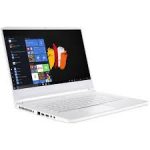
CPU: 9th-generation Intel Core i7 | Graphics: NVIDIA GeForce RTX 2060 – 2080 | RAM: 16GB – 32GB | Screen: 15.6″ 4K UHD (3840 x 2160) 16:9 IPS | Storage: 1TB
Acer is notable for making gaming PCs, however with conceptD 7, it’s pre-owned its experience of building slim, light, and incredible workstations to construct a phenomenal PC for picture takers and photo editors.
It has a sizable amount of capacity to run even the most requesting of photograph altering applications, and it accompanies a dazzling Pantone-approved 4K IPS screen that lets you see your photographs in the manner in which they should be seen.
It likewise accompanies a lot of ports and a snappy and moderate case, so it glances great in any studio, and it’s effectively compact, as well. It’s costly, however, the degree of execution this PC offers implies it’s certainly justified regardless of the exorbitant cost tag.
| Pros | Cons |
| Good selection of ports | Not as thin and light as MacBook Pro |
| Very powerful | Plain design |
Razer Blade 15
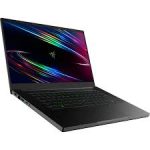
Processor: Up to Intel Core i7-10875 (8 cores, 2.3GHz base frequency) | RAM: 16GB | Storage: Up to 1TB SSD | Screen: 15.6-inch OLED, 4K 3840×2160, touchscreen
Razer’s brand center is around the gaming business sector, and the Blade 15 4K is basically a gaming PC, yet the styling doesn’t yell about it as numerous workstations are focused on gamers. Just the enlightened green Razer logo on the front and the color-changing illuminated keyboard part with the game, yet the last can be quieted to keep things calmer.
What makes the Blade 15 a decent photo editing laptop is its 15.6-inch 4K screen, which in the reach of beating the Blade 15 Advanced model is presently an OLED board, giving staggering color dynamic quality and difference. Gracious, and it’s even touch-delicate, with a super-quick 300Hz refresh rate for super-smooth gaming, if that is your thing. This specific Blade 15 design additionally comes outfitted with a blasting quick GeForce RTX 2080 Super graphics card.
That is extraordinary for gaming at 4K resolution, where it’ll give an observable execution help, however, applications like Photoshop won’t generally utilize the additional oomph. Strong form quality with brilliant heat ventilation, just as the three traditional USB ports are barely noticeable in addition to focuses, however, the nonappearance of an SD card opening is a disgrace.
Here we’re posting costs for all Blade 15 variations, the lead Advanced model, yet even a ‘base’ Blade 15 will in any case be a photo editing machine.
| Pros | Cons |
| Healthy performance | Fast graphics cards are not that useful for photographers |
| Quality display and well made |
Microsoft Surface Book 2 (13.5-inch)
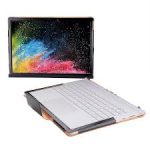
CPU: Intel Core i5 – i7 | Graphics: Intel HD Graphics 620 – Nvidia GeForce GTX 1050 | RAM: 8GB – 16GB | Screen: 13.5” 3000 x 2000 PixelSense Display with touchscreen | Storage: 256GB, 512GB, or 1TB PCIe SSD
Microsoft has been consistently delivering some splendid gadgets focused on creatives and experts for as far back as a couple of years now, and the Microsoft Surface Book 2 is one of its best – accessible in both 13.5 and 15-inch variations (however we incline toward the 13.5-inch for photo editing on account of the extra portability). It’s a splendid 2-in-1 gadget, with Windows 10 introduced, which implies you can utilize ground-breaking applications like Photoshop with no issues – and the Surface Book 2 can be utilized as a tablet or as a customary PC.
The segments inside the Surface Book 2 are superb and can deal with any photograph-editing task, however, the genuine superstar is its lovely screen. The Surface Book 2 offers a high 3,000 x 2,000 resolution and an ideal perspective proportion for review APS-C and full-outline images. You can likewise purchase the Surface Pen pointer and use it with the Surface Book 2’s touchscreen for an inconceivably flexible apparatus for photographers and architects.
| Pros | Cons |
| Unrivaled display | No Surface Pen included |
| Seamless tablet integration | Pricey |
HP Spectre x360 15 Convertible

The x360 moniker in the name alludes to the touchscreen’s capacity to flip around through 360 degrees so the PC can change over to a tablet. Windows 10 naturally distinguishes the screen’s position and adjusts the interface to be more touch-friendly.
It’s a helpful element on the off chance that you routinely utilize your PC in a hurry and can’t generally locate a surface to lay it on. Notwithstanding, while a 1.92kg weight is sensible for a 15.6-inch PC, it’s hefty for a tablet, so the Specter isn’t generally a swap for a traditional tablet.
HP has moved to an AMOLED screen for its leader 2020 Specter x360 15-eb0001na model. It actually boats a 4K (3840 x 2160) resolution, however, you currently get 100% DCI-P3 color space inclusion and an impressive 400 nits top splendor. The expansion of a Corning Gorilla Glass anti-scratch covering further aides the x360’s common sense in tablet mode. Simply a solitary ordinary USB Type-A port is available, alongside two Thunderbolt 3/USB-C ports, an HDMI 2.0b port, and a Micro SD space.
There’s a lot of picture-altering power, however, because of a 6-core tenth gen Intel Core i7 processor and 16GB of RAM. The NVIDIA GeForce GTX 1650ti designs card is additionally welcome incorporation for GPU-quickened handling and gaming. The programmed facial acknowledgment for Windows Hello sign-in is another helpful component.
| Pros | Cons |
|
Nifty tablet conversion
|
Heavy and bulky in tablet mode |
| 4K AMOLED screen | Limited port selection |
Dell XPS 17 (2020)
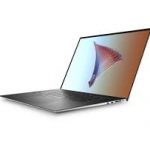
On the off chance that you need a big screen Windows 10 PC for photo editing, at that point, the new Dell XPS 17 is an awesome decision. Its enormous screen is brilliant and energetic, and its 16:10 perspective ratio screen is ideal for picture takers. It offers more vertical space than the standard 16:9 widescreen display, and it tends to be designed with a 4K Ultra HD+ resolution of 3,840 x 2,400.
Not just that, however it likewise bolsters 100% Adobe RGB and 94% DCI-P3 color extents, which implies this offers precise tones too, which is significant for proficient picture takers, or any individual who needs their photographs to look their absolute best with a touch of editing. It’s likewise stuffed with probably the best portable parts out there, and can even be fitted with an amazing graphics card also. Besides, for a 17-inch PC, it’s amazingly slender and light too.
| Pros | Cons |
| Nice design | Lack of ports |
| Great screen |
Best Laptops for Photo Editing on a Budget
Acer Swift 3 14-inch
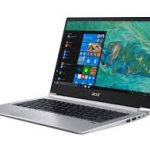
CPU: 2 or 4 -core Intel Core i5 or Core i7 | Display: 14-inch Retina Display) | Graphics: Intel HD Graphics 620 | Memory: 8GB – 16GB | Storage: 256GB – 4TB SSD
Coming decked in an all-aluminum suspension and a scope of tones, the presence of Acer’s new PC range has partitioned assessment. Yet, what’s reasonable is that you get an incredible particular for your cash, making the Acer Swift 3 (2020) one of the best PCs for photo editing.
With a quad-core Intel processor and 8GB of memory as standard, even the mid-range model comes in at not exactly a large portion of the cost of Apple’s MacBook Pros however can convey generally a similar handling power.
Furthermore, the remainder of the determination doesn’t hold back either – the 14-inch screen utilizes IPS backdrop illumination innovation for more extensive survey points and more splendid color, and supports FHD (1,920 x 1,080) resolution.
The keyboard is extraordinary to chip away at as well, settling on this an awesome decision for any individual who needs the ability to accomplish genuine photography work, without using up every last cent. Also, in the event that you need a 4K screen, a PC with that alternative is accessible as well, again for not as much as contenders are inquiring.
| Pros | Cons |
| Powerful | Relatively thick frame |
| Affordable |
Asus ZenBook Duo UX581
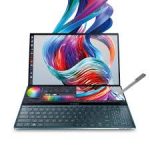
Processor: Intel Core i9-9980HK (8 cores, 2.4GHz base frequency) | RAM: 16GB | Storage: 512GB SSD | Screen: 15.6-inch IPS LCD, 3840×2160, touchscreen | ScreenPad Plus: 14-inch, 3840×1100
The grandiose argument with the ZenBook Duo is its enormous touch-sensitive auxiliary screen over the keyboard. Asus considers it the ScreenPad Plus, and you can utilize it as a certifiable optional screen to display another application to that on the fundamental screen, or it very well may be part into a few sections, each containing an alternate open application. There’s even a screen expansion work that allows you to open a solitary application over the two screens.
It’s a definitely more flexible set-up than the first ScreenPad fused in the old ZenBook Pro UX580 – our lone analysis is the ScreenPad’s review points and color liveliness aren’t comparable to the principle screen, so there is some disparity of color and difference between the two display.
This is perceptible to some extent because of the incomparable color and difference of the essential screen. We checked its publicized 100% Adobe RGB color space inclusion, and the cited DeltaE <2 color exactness is additionally precise, as our adjustment device estimated a great 1.07.
By and large screen brilliance isn’t exactly comparable to the MacBook’s Retina screen, yet you’re probably not going to see it during a true survey. The UX581 is outfitted with a bursting quick 8-core Intel Core i9 processor and you can furnish the ZenBook with up to 32GB of RAM – extraordinary for substantial Photoshop editing.
There’s a decent equilibrium of two USB-C, two traditional USB ports, an HDMI port, an earphone attachment, however, the Micro SD card opening is of restricted use to photographers.
| Pros | Cons |
| Useful ScreenPad Plus | Mediocre battery life |
| Very fast | ScreenPad Plus image quality not great |
LG Gram 14″ (14Z90N)
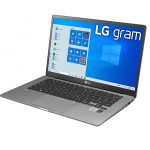
LG makes the Gram in three screen sizes: 14-inch, 15-inch, and 17-inch. All have their advantages and disadvantages for movability versus seeing simplicity, yet the smooth 14-inch model is particularly engaging for in a hurry picture takers. You get a Full HD 1920×1080 resolution; not exactly numerous adversaries here, however it’s sufficient to create a fresh review insight, while IPS screen tech guarantees great tone and differentiation exactness. The Gram range all in all will be about portability.
The 14-inch form is just 1kg – contrast this with the similarly little Lenovo 14-inch ThinkPad X1 Carbon that weighs around 1120g and the Gram is observably lighter in the. The thin plan actually has space for a flexible choice of two USB-A ports, one USB-C port, and an HDMI port, in addition to a microSD opening. While satisfyingly snappy by and large use, the 4-cores Intel Core-i7 processor in our Gram battled in our speed benchmarks and can require a long time to apply more mind-boggling Photoshop channels.
Anyway, the result from utilizing a processor outfitted towards effectiveness over out and out speed is heavenly battery life: LG guarantees up to 18.5 hours per charge. Factor LG’s sharp evaluating for the Gram and it’s an enticing choice on the off chance that you esteem convenience over speed.
| Pros | Cons |
| Great battery life | Screen res not the best |
| Extremely light and slim | Lacks some outright speed |
How We Picked
We relied on the opinion of experts and feedback of users based on three major factors: The best laptops for photo and video editing, the best portable, and the best budget photo editing laptops.
More facts and data about these photo editing laptops were gotten from deep research and online reviews. With the result and feedback we got (both positive and negative), we were able to rank each product according to the standard we set.
Looking at our review, each laptop has been carefully categorized according to our research result. Also, take note that the photo editing laptops that didn’t meet our standard were not included on this list.
Frequently Asked Questions
Conclusion
If you’ve read this review, it implies you’re searching for the best photo editing laptops to buy, and without a shadow of a doubt, we believe you must have found one or two products on our list that you’ll like to purchase. If that be the case, ensure you check all the necessary details of your preferred choice before purchasing.